A good workout shirt can look new after fifty washes or tired after five, and the difference often has little to do with the price. Heat, fabric softener and long waits in a gym bag are the usual causes of odor, pilling and lost stretch. Washing athletic wear well is simple once you know what each step does. This guide covers the routine that keeps gear comfortable and lasting.
This is general information about clothing care. Always follow the care label on each garment, since fabrics and finishes vary.
Why athletic wear needs different care
Most workout clothes are made from synthetic fibers such as polyester and nylon, often with spandex for stretch. These fibers are strong but sensitive to two things: heat and residue. Heat damages spandex and can set odors into the fabric. Residue from fabric softener and too much detergent can coat the fibers, which reduces wicking and traps smell.
Sweat, body oils and bacteria build up in the fabric during a workout. The longer clothes stay damp, the more odor develops. So the first step in care is to get gear out of the bag and washed quickly.
Before the wash
- Take clothes out of your gym bag as soon as you get home, and hang them up to air out if you cannot wash them right away.
- Turn garments inside out, so the side against your skin faces the water and the detergent.
- Close zippers and hook-and-loop fasteners, which can snag other fabrics.
- Put delicate or fitted items in a mesh bag.
- Sort by color, and wash like fabrics together.
Washing steps
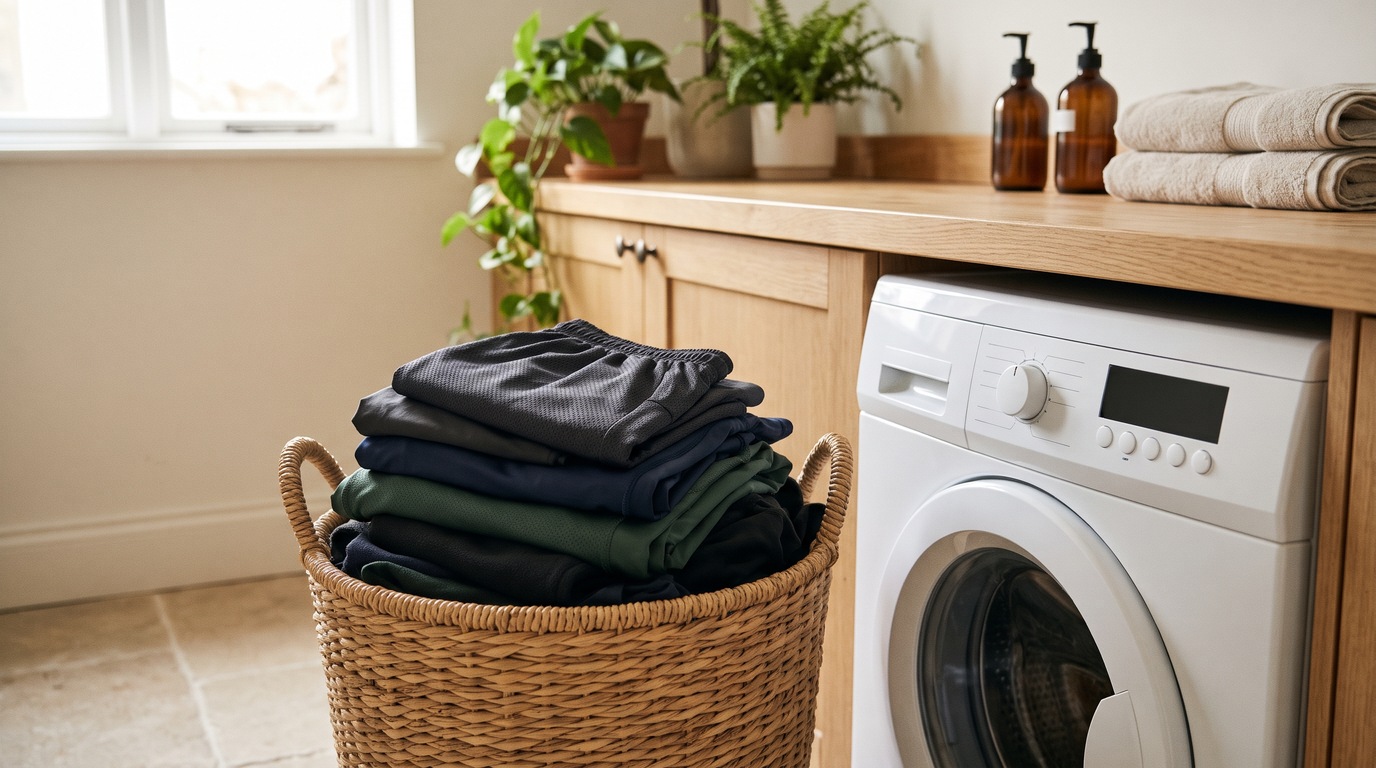
- Choose a cold or cool water cycle. Hot water can damage spandex and fade colors.
- Select a gentle or normal cycle, depending on the care label.
- Use a small amount of detergent. More detergent does not mean cleaner clothes, and extra can leave residue.
- Skip fabric softener and dryer sheets, which coat the fibers.
- Skip bleach, which weakens stretch fibers.
- Run an extra rinse if the water is hard or if clothes feel stiff.
| Step | Do | Avoid |
|---|---|---|
| Temperature | Cold or cool water | Hot water |
| Detergent | Small, measured amount | Extra detergent |
| Softener | None | Fabric softener, dryer sheets |
| Cycle | Gentle or normal | Heavy-duty cycles |
| Load | Similar fabrics together | Washing with towels and zippers |
Drying
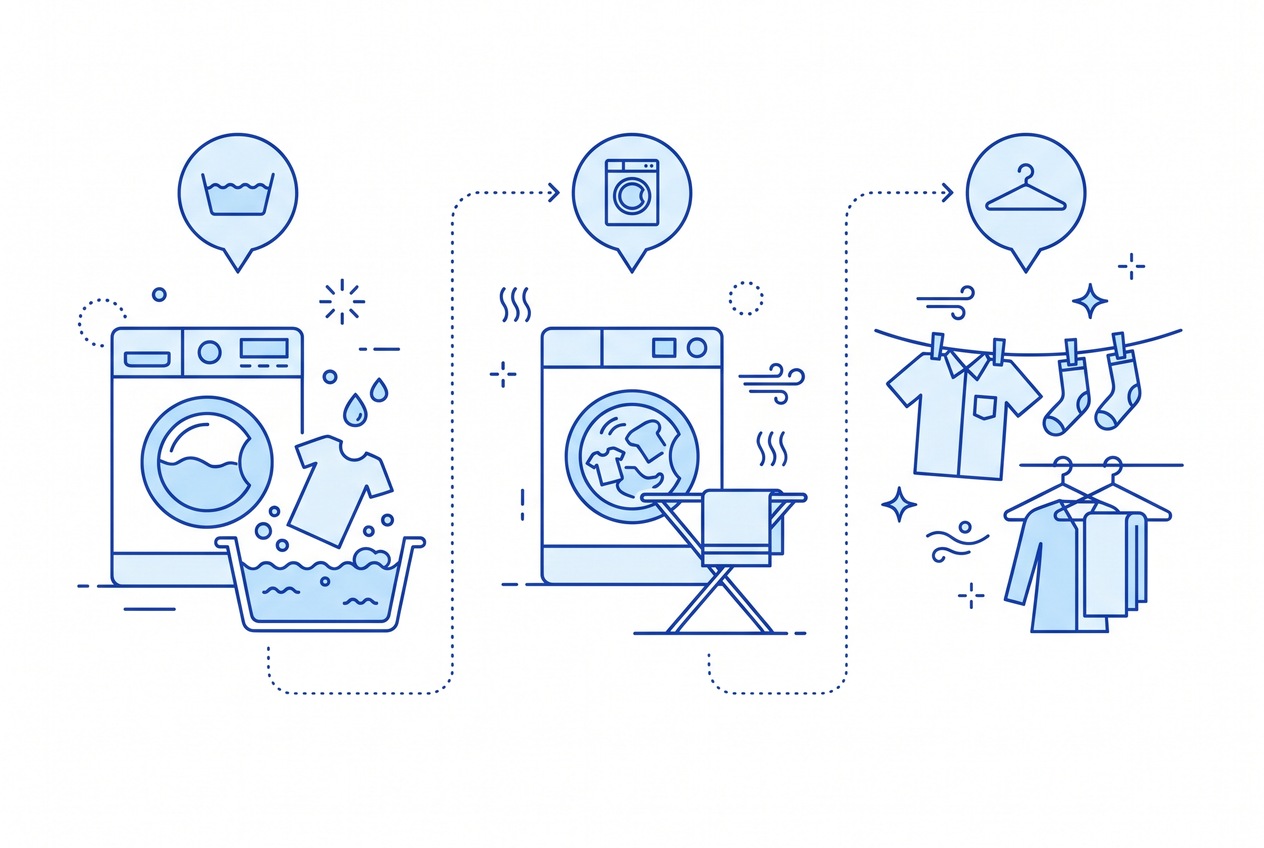
Air drying is the gentlest option. Hang garments on a rack or a line, away from direct heat. Most synthetics dry quickly. If you use a dryer, choose a low heat or air-only setting and remove the clothes while they are slightly damp.
High heat is one of the main reasons waistbands lose their stretch and tights go thin. If a garment feels stiff or shiny after drying, the heat was probably too high.
Dealing with odor
If clothes still smell after a wash, try these steps:
- Soak the garment in cool water with a small amount of detergent for thirty minutes, then wash as usual.
- Use a detergent made to remove odors from synthetic fabrics.
- Wash soon after wearing, since odor is harder to remove once it sets.
- Don’t use hot water or the dryer on a smelly garment, since heat can set the odor.
Some people add a small amount of white vinegar to the rinse. Check the care label first, and use only a little, since strong solutions may affect some fabrics.
Preventing pilling
Pilling happens when fibers rub together and form small balls on the surface. You can reduce it by:
- Washing athletic wear separately from rough items like jeans and towels.
- Turning garments inside out.
- Avoiding backpacks with rough straps that rub on sleeves.
- Using a gentle cycle.
If pills appear, remove them with a fabric shaver or a lint remover, being careful not to cut the fabric.
Storing gear
Store clean, dry gear folded or hung. Don’t compress damp clothes in a drawer or a bag. Keep merino items folded rather than hung, since their weight can stretch the shoulders.
Rotate your gear. Wearing the same item every day wears it out faster, and a second set gives clothes time to recover between wears.
Special items
Some items need a little extra care.
- Sports bras and fitted tops: wash them in a mesh bag on a gentle cycle, and air dry them so the elastic keeps its snap.
- Socks: turn them inside out, and wash them with similar items. Merino socks prefer cool water and a gentle cycle.
- Jackets and shells: follow the care label closely, because water-repellent finishes need specific products and heat settings.
- Reflective or printed items: wash inside out to protect the print.
- Wool base layers: use a wool-safe detergent and lay the garment flat to dry.
If a garment has no care label, wash it in cold water on a gentle cycle and air dry, which is the safest choice for most fabrics.
When to replace gear
Replace athletic wear when the fabric thins, the elastic loses its stretch, the waistband rolls or odor will not wash out. Also replace anything with a hole near a seam that will keep growing.
A well-cared-for set of workout clothes can last several years, and replacing worn items on time prevents discomfort during exercise.
The bottom line
Wash athletic wear soon after use, in cold water, inside out, with a little detergent and no fabric softener. Dry it with low heat or air, treat odor early and store it clean and dry. These habits are simple, and they keep workout clothes comfortable and lasting longer.